
What Is a Court Docket in Brown County
A docket is the dated list of everything that happens in a case. It records filings, hearings, motions, orders, and other court actions in the order they occur. In Brown County, the docket lives inside the case detail on Wisconsin Circuit Court Access. Each line marks one event. Together the lines tell the story of the case from the first filing to the final judgment.
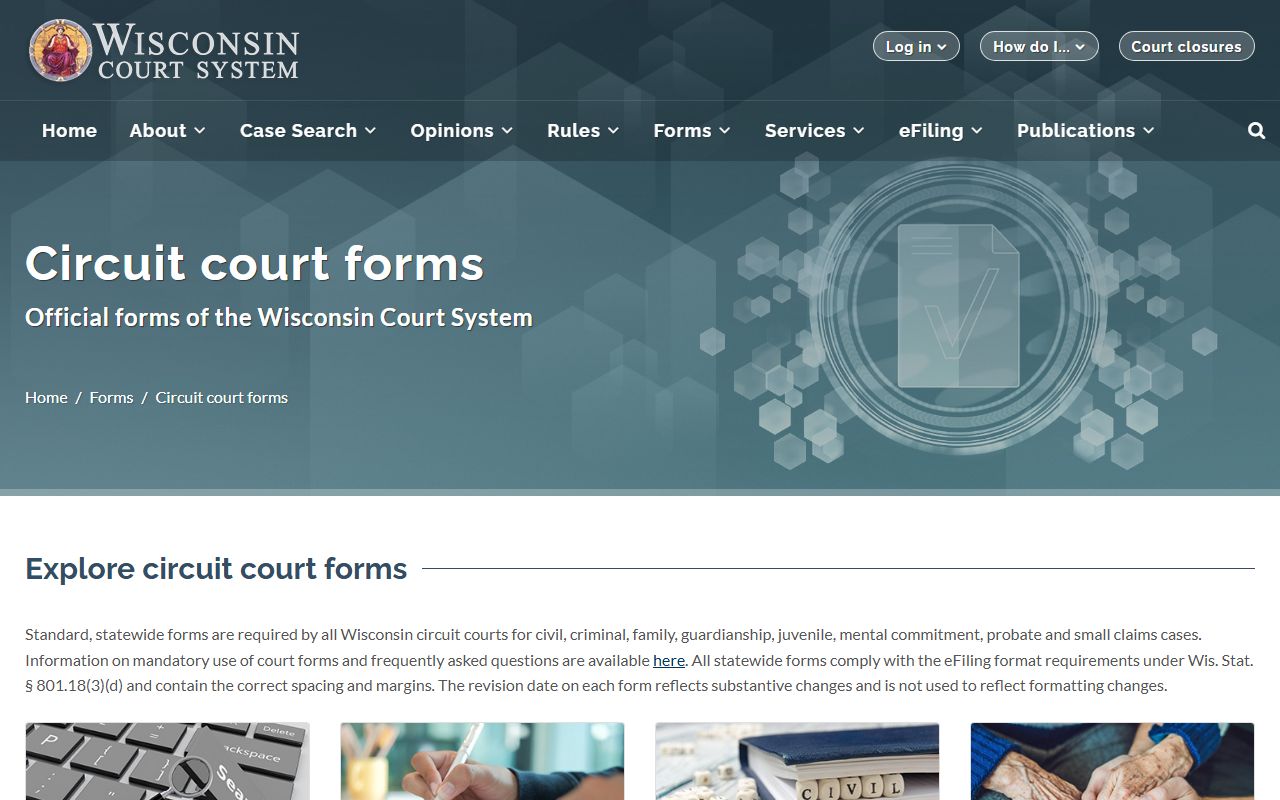
The docket is not the same as the full case file. The docket lists the events; the file holds the actual documents, such as the complaint, motions, and orders. Brown County uses standard Wisconsin circuit court forms for most filings, and those forms show up as entries on the docket. The statewide circuit court forms page shows the kinds of documents that generate docket lines.
Knowing the difference helps you decide whether a quick docket check is enough or whether you need the documents themselves.
How to Find Brown County Dockets Online
The docket lives on Wisconsin Circuit Court Access at wcca.wicourts.gov. The portal is free. Once you open a case, scroll to the records or activities area to see the docket entries. The same tool covers all eight Brown County circuit branches, so you do not need to know the branch in advance.
- Open the WCCA case search and accept the terms screen.
- Choose Brown as the county for local results.
- Enter a case number, a party name, or a business name.
- Open the case detail and read the dated docket entries.
Each entry shows when something happened and who acted. Future hearing dates appear under the activities or court dates area of the same case detail page. An activity line can list the date, the start time, the location, a short description, the hearing type, and the court official. That is how you spot an upcoming arraignment, status conference, motion hearing, or trial date. Because the data comes from the statewide CCAP system, a brand-new filing may take a short time to appear, so check again if a very recent event is missing.
Sample Brown County Docket Entry
A docket line packs several fields into one row. The date anchors the entry. The description names the event, such as a motion filed, a hearing held, or an order signed. The court official and any amount round out the line. The table breaks down a typical entry.
| Field | What It Shows |
|---|---|
| Entry Date | The date the clerk recorded the event. |
| Event Type | The action, such as a filing, hearing, or order. |
| Party Filing | Which party or official took the action. |
| Amount | A fee, fine, or judgment figure tied to the entry. |
| Additional Text | Notes the court adds to explain the event. |
Courts That Publish Dockets in Brown County
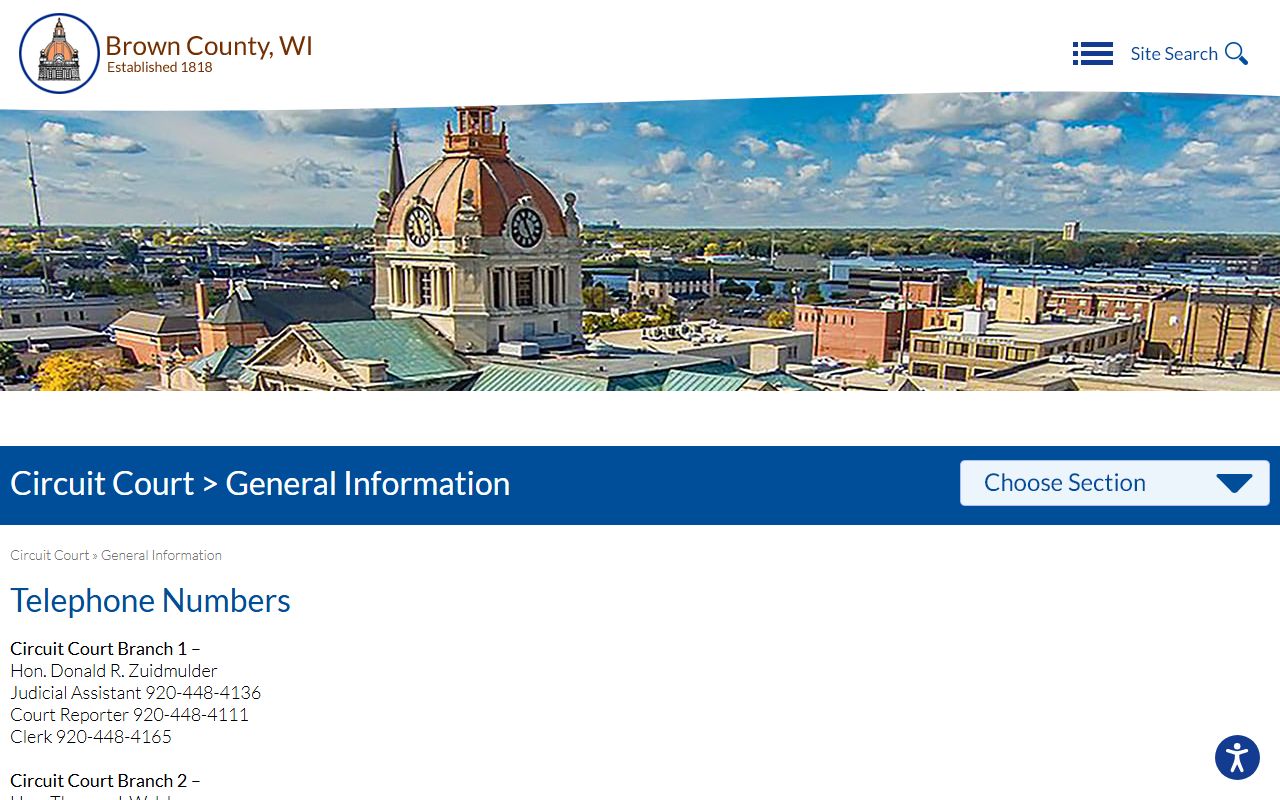
Most Brown County dockets come from the circuit court through the statewide portal. The circuit court runs eight branches, and all of them feed the same public system. Municipal courts keep their own separate records for local ordinance and traffic cases. The county's branch phone directory lists each branch and its staff.
Here is where docket information comes from in the county.
- Brown County Circuit Court - eight branches; public dockets on WCCA.
- Green Bay Municipal Court - local ordinance and municipal traffic; separate records.
- Wisconsin Court of Appeals - appellate dockets through the state court system.
Green Bay Municipal Court holds proceedings at 330 S. Jefferson Street, a short walk from the main courthouse. Its docket is not on WCCA. A person who wants a jury trial in that court must ask in writing within ten days of the initial appearance, with a check payable to the Brown County Court Clerk. So if a citation names a municipal court rather than the circuit court, the docket and the contact are different.
Docket vs. Full Case Record
The two serve different needs. A docket is a quick, public list you can read from home. The full case record holds the documents and may need a clerk request or a courthouse visit. Use the docket to track progress; use the full file when you need the actual paperwork.
| Docket | Full Case Record | |
|---|---|---|
| Format | List of dated entries | Full filed documents |
| Access | Online and free on WCCA | May need a fee or a clerk request |
| Use | Track case progress and dates | Legal review and certified copies |
People check Brown County court dockets for many reasons. A defendant confirms the next court date. An attorney follows filings between hearings. In a small claims or eviction case, the return date is the entry that matters most, because Brown County rules require both the plaintiff and the defendant to appear at the return date in person or by attorney. A landlord, a tenant, or a creditor can use the docket to confirm that date and avoid a missed appearance.
Payment and Judgment Entries on a Docket
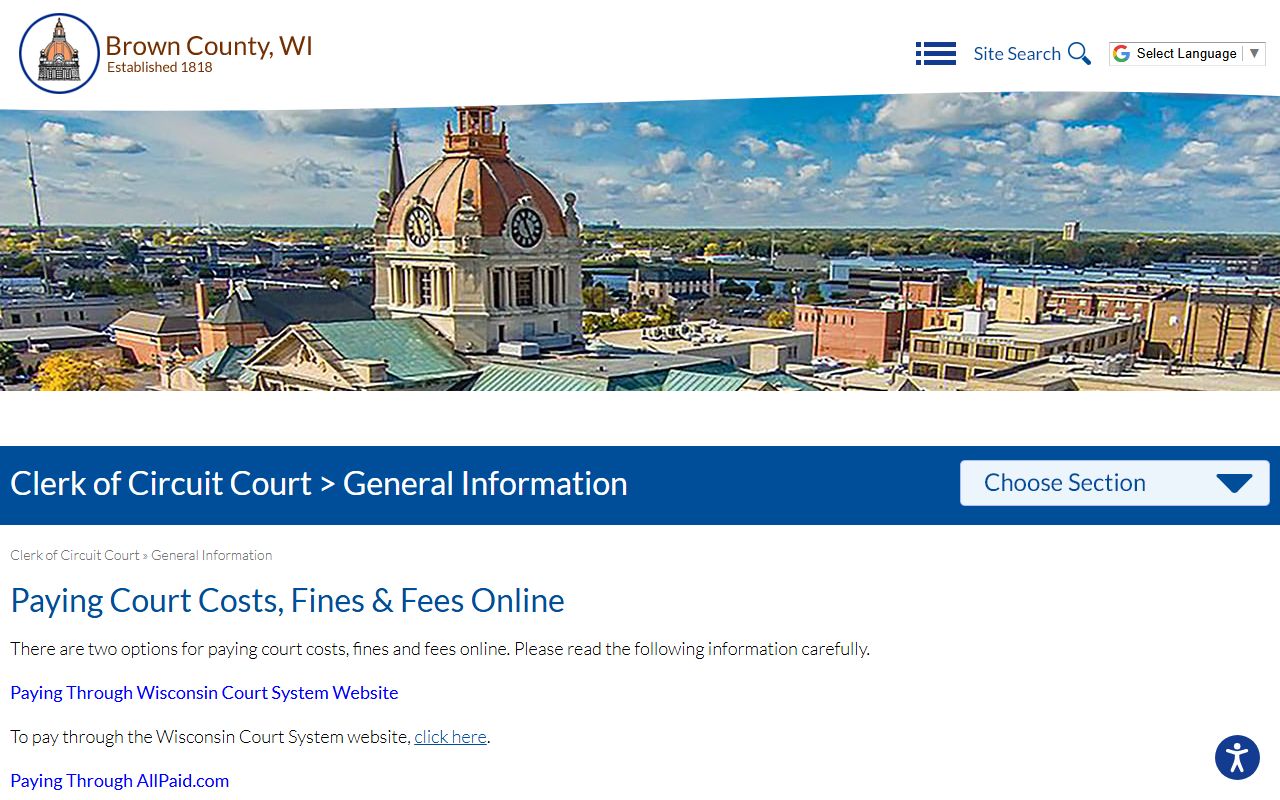
Money matters show up on the docket too. Fines, forfeitures, costs, and judgments each create entries, and many carry a running balance. Brown County lets people pay court costs, fines, and citations online. The county's payment page explains the options and the AllPaid location code.
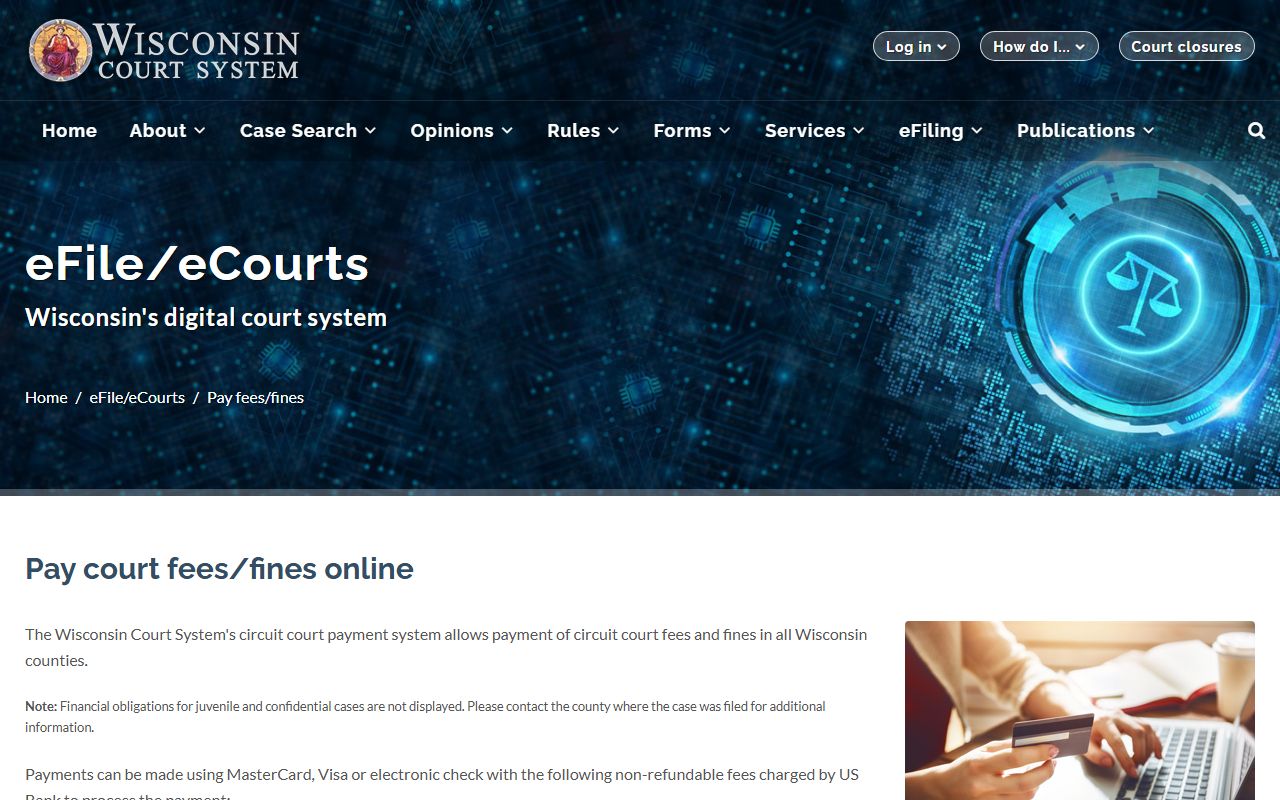
Statewide payments run through the Wisconsin Court System site as well. That tool handles fines and many citations tied to circuit court cases. Brown County warns that a citation must name Brown County Circuit Court or 100 S. Jefferson Street before you pay it through the county route. A citation that names another municipality goes to that municipal court instead.
A satisfied judgment will eventually show a satisfaction entry on the docket once the clerk records it.
How to Read a Brown County Docket
Short codes appear throughout a docket. The case number prefix tells the type, such as CF for felony or CV for civil. Entries like "initial appearance," "arraignment," and "status conference" mark common hearings. A "continuance" means a date was pushed back. An "order" entry means a judge or commissioner decided something.
The disposition entry is the one to read with care. It shows whether the matter ended in a plea, a finding, a dismissal, or a judgment. Brown County dockets also flag warrant events, such as a bench warrant for a missed court date. When a line is unclear, the Clerk of Circuit Court Records Management office can explain it, though staff cannot give legal advice.
One more path matters for appeals. A final circuit court order can be appealed to the Wisconsin Court of Appeals, and the appellate docket then lives in the state appellate system rather than in the trial court file. The circuit docket may still show a cross-reference or a notice of appeal entry, which is your cue to follow the case up to the higher court. Federal matters never appear on a Brown County circuit docket; those run through the federal courts on a separate system.