
Wisconsin Public Records Law
Wisconsin's public records law opens with a clear statement of policy. The public is entitled to the greatest possible information about the affairs of government and the official acts of public officers. That policy, set in Wis. Stat. § 19.31, guides how the law is read. It applies to Brown County offices, including the county, the sheriff, and the clerks.
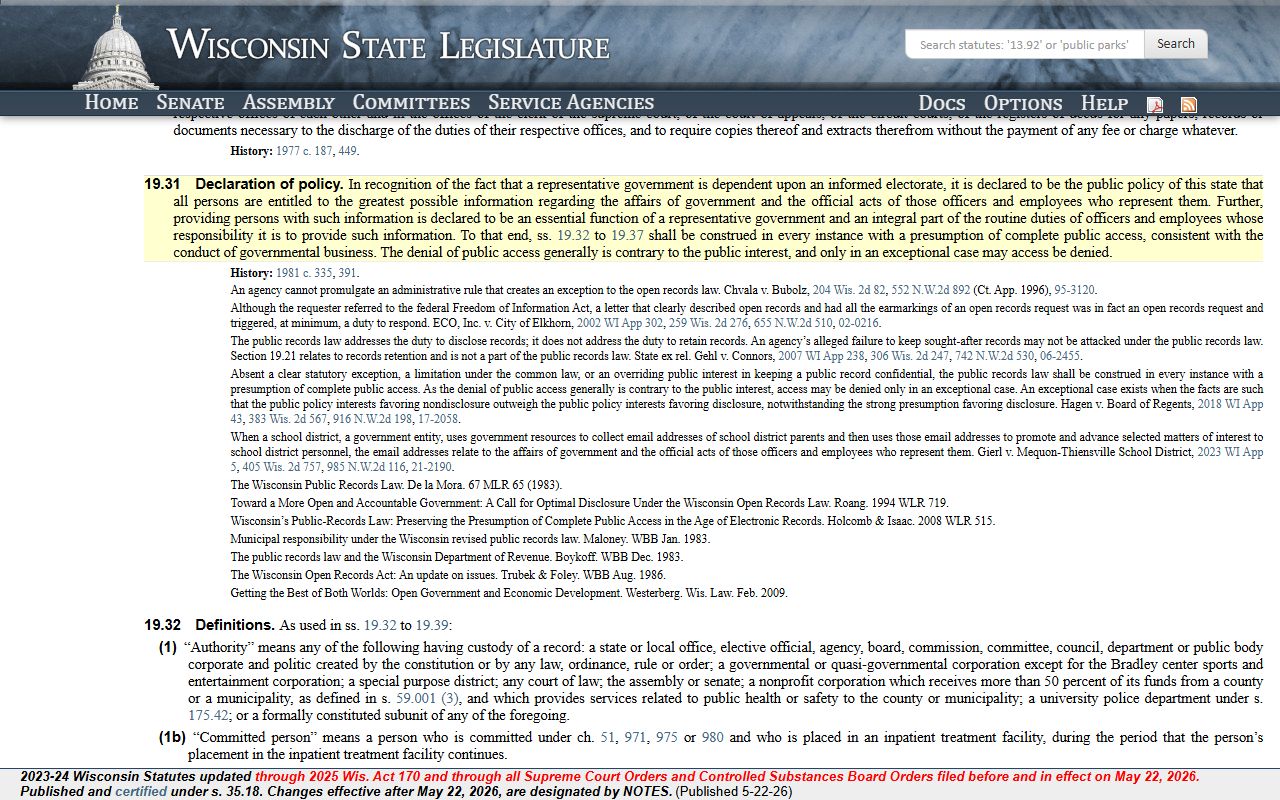
The law defines its terms broadly. Under Wis. Stat. § 19.32, a record can be paper, email, photographs, audio, a database, or other material kept by an authority. That broad definition is why so many county materials can be public records, subject to the exceptions other statutes create.
What Records Brown County Offices Maintain
Different offices hold different records in Brown County. Court case files sit with the Clerk of Circuit Court. Marriage licenses and county administrative records sit with the County Clerk. Land and vital records sit with the Register of Deeds. Jail and law-enforcement records sit with the Sheriff's Office. The definition of a record is broad, so the kinds below are only the common categories.
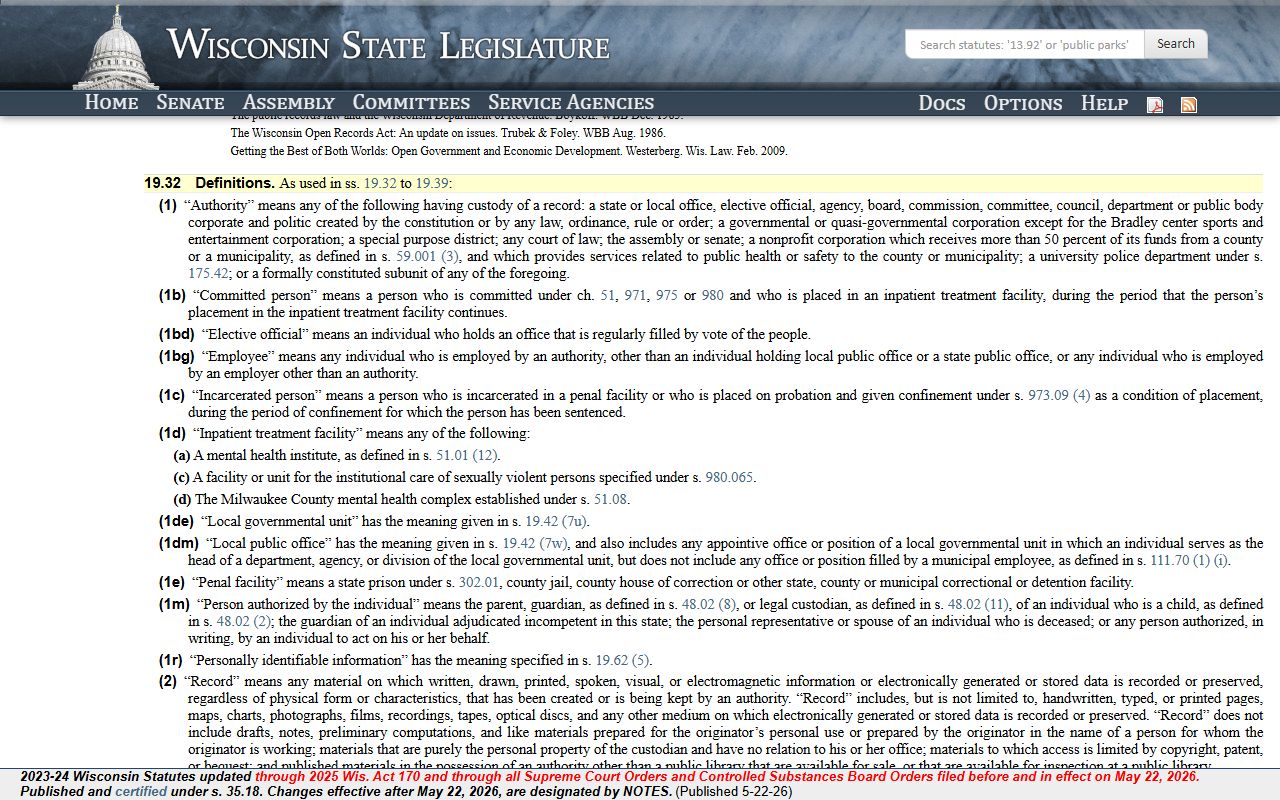
Common Brown County public records include the following.
- Court records - case files held by the Clerk of Circuit Court.
- Land records - deeds, mortgages, and plats at the Register of Deeds.
- Vital records - birth, death, marriage, and divorce certificates.
- Sheriff and jail records - reports and jail records from the Sheriff's Office.
- County administrative records - board, election, and county business records.
How to File a Public Records Request in Brown County
A records request does not need a special form in Wisconsin, but it should be clear. Address it to the office that holds the record, describe what you want, and give the office a way to reach you. A focused request gets a faster answer than a broad one, and it usually costs less because the office spends less time locating records.
- Identify the office that holds the record, such as the sheriff or a clerk.
- Describe the records clearly, with names, dates, or case numbers.
- Submit the request by mail, email, or the office's stated process.
- Wait for the response, which the custodian provides as soon as practicable.
- Pay any allowed fee and receive the records.
The Sheriff's Office, for example, asks that jail record requests go through its public record request process, and it handles them in the order received. Court records work differently. A Brown County court file is requested through the Clerk of Circuit Court rather than as a general open-records request, and copy or search fees go through Records Management. So a Brown County public records request and a court copy request are not always the same path, even though both rest on the same open-government policy.
Public Records Request Fields
Whether you write a letter or use an office form, include enough to identify the record and reach you. The table lists what to provide.
| Field | Required | Notes |
|---|---|---|
| Description of Records | Yes | Be specific about what you want. |
| Contact Information | Yes | So the office can respond and quote fees. |
| Date Range | No | Narrows the search and lowers cost. |
| Format Preference | No | Paper or electronic copies. |
| Office Addressed | Yes | The custodian that holds the record. |
Response Timelines
Wisconsin law does not set a single fixed deadline. A custodian must respond as soon as practicable and without delay. The reasonable time depends on the size and difficulty of the request, so a simple request should be quick while a large one can take longer. The Brown County Jail Division states that its public record requests are handled in the order received and may take up to 10 business days. The county also asks people not to send duplicate requests, since duplicates can create extra responses and fees.
Public Records Fees in Brown County
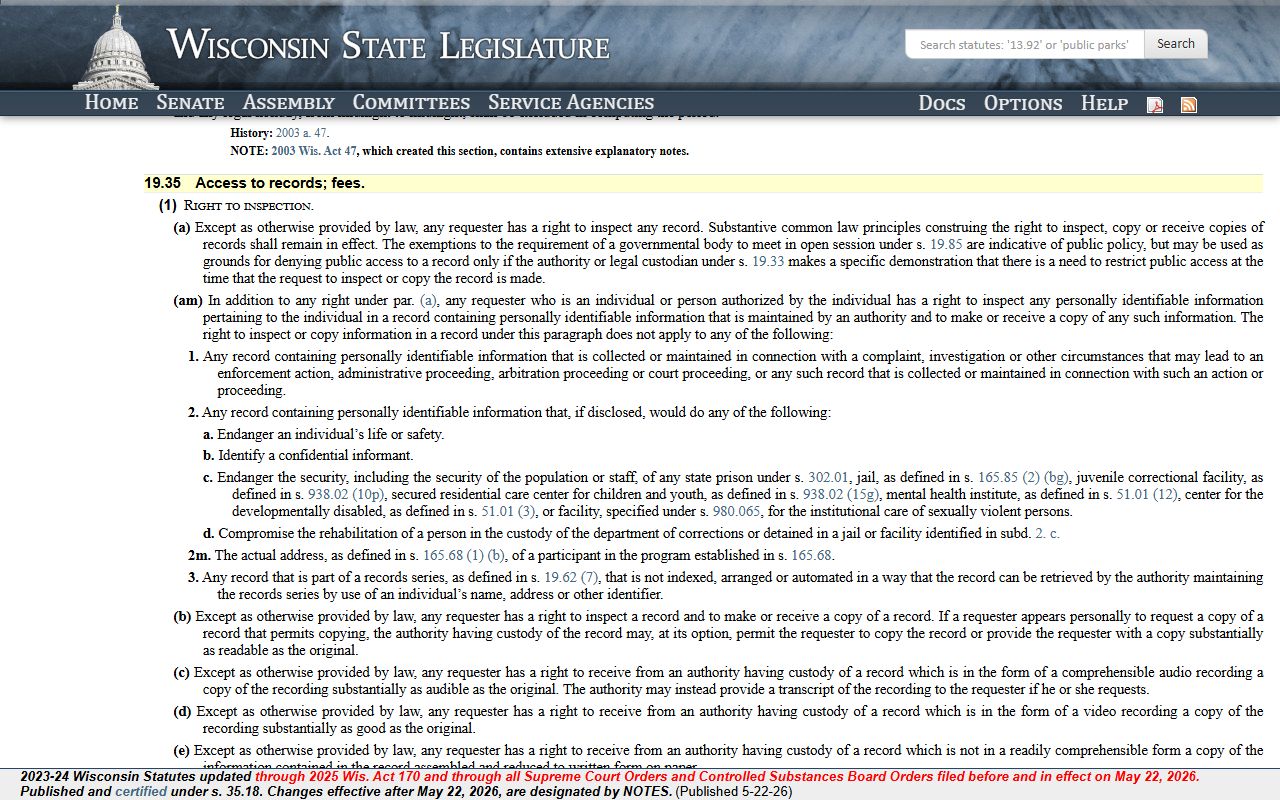
Fees are controlled by Wis. Stat. § 19.35. A custodian may charge for actual, necessary costs such as copies and, in some cases, the cost of locating records. The table shows where the fee authority comes from rather than a fixed price, since amounts vary by office and request.
| Item | Amount |
|---|---|
| Copy fees | Actual, necessary cost under § 19.35(3) |
| Location fee | Allowed when location cost is $50 or more |
| Court copy and search fees | Call Records Management, 920-448-4521 |
| Vital record certificate, first copy | $20 |
Confirm the exact charge with the office before you commit, because each Brown County custodian sets its allowable cost within the limits of the statute, and a prepayment may be required for a larger request.
Records That Are Exempt
Access is broad but not total. Several categories are closed by other laws. Juvenile records are confidential, adoption records are closed, and mental health treatment records are restricted. Sealed and expunged court records are not public. Personal identifiers such as Social Security and financial account numbers are redacted, and certain driver information in police reports is protected by federal privacy law. Records tied to an active investigation can be withheld while the case is open. The limits on access live in Wis. Stat. § 19.35 and in the specific confidentiality statutes for each record type.
Police reports raise a special wrinkle in Brown County. Personally identifiable information drawn from Wisconsin DOT driver records is protected under the federal Driver's Privacy Protection Act. The Sheriff's Office uses a permissible-use form before releasing that information without redaction. So a person can often get a report, but the driver data inside it may be blocked unless the requester has a permitted purpose. When part of a record is exempt, the office should release the rest and explain what was withheld and why.
If Your Request Is Denied
A custodian who denies a request must explain the reason. If you believe the denial is wrong, Wisconsin law gives you a path to enforce access. Under Wis. Stat. § 19.37, a requester can seek a court order, called mandamus, to compel release, and the statute addresses damages and fees in some cases.
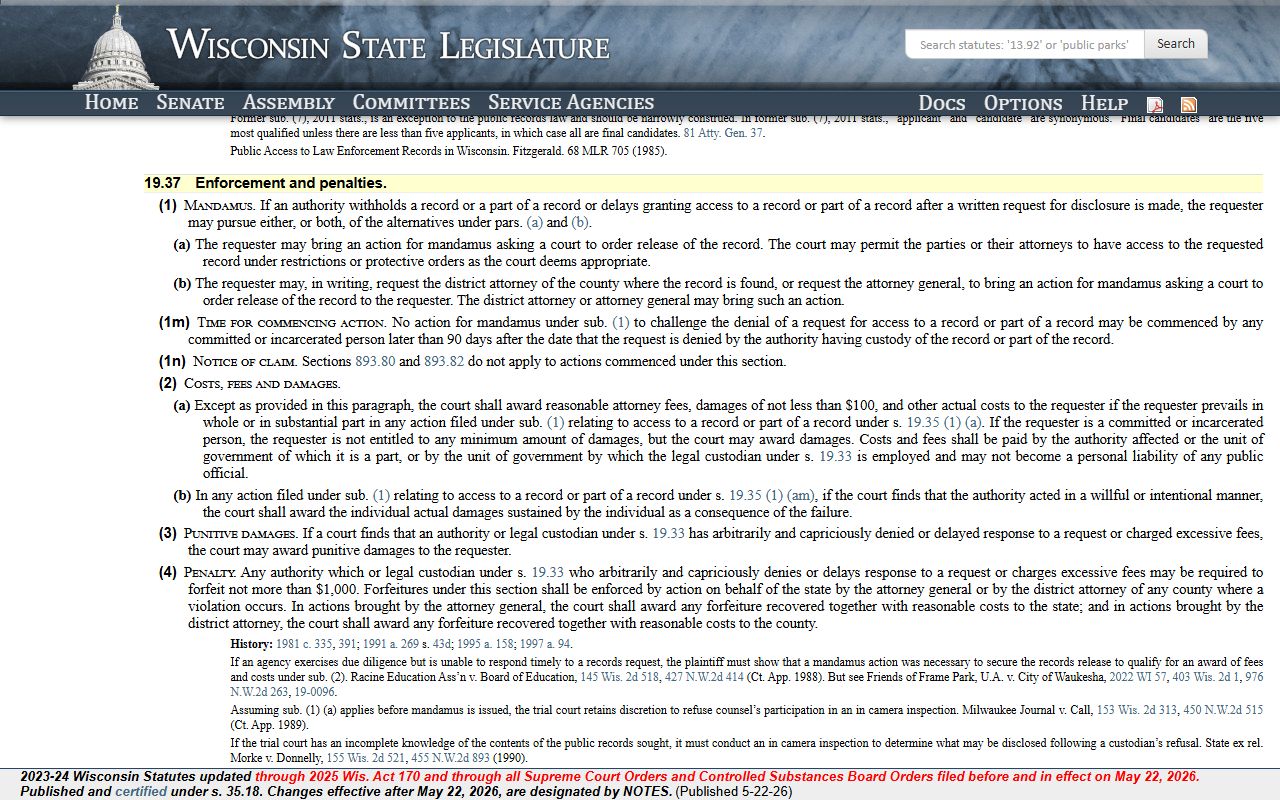
District attorneys and the attorney general can also play a role in certain enforcement situations. Before going to court, it is usually worth asking the office to reconsider or to narrow the request, since many denials come from a request that was too broad rather than a record that is truly closed.